
Understand the game before the first move
This is a collection of short objectives, not one endless sandbox.
Fun Ragdoll Challenge is presented by its publisher pages as a set of physics-based minigames from Eccentric Studio Games. One scene may ask for a well-timed hit; another may use an aim point, a projectile, or an environmental object. The shared ingredient is the ragdoll response after your action. The task is to read the current scene and make the input that serves that scene, rather than repeat a single strategy across every level.
That makes Fun Ragdoll Challenge different from a free-form toybox. You may have only a short opportunity to act, and a successful result depends on the level’s particular objective. Before touching the screen, locate the target, the controllable object and any obvious hazard. Check whether the scene is waiting for a click, a drag or a swipe. The live game instructions take priority because the available minigames and menus can change between host versions.
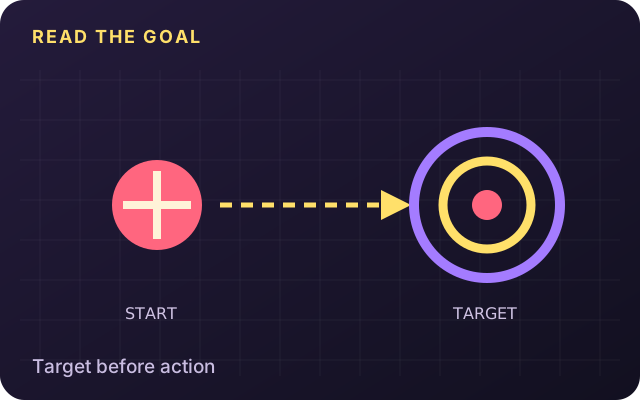
Use one clean input to discover the rule
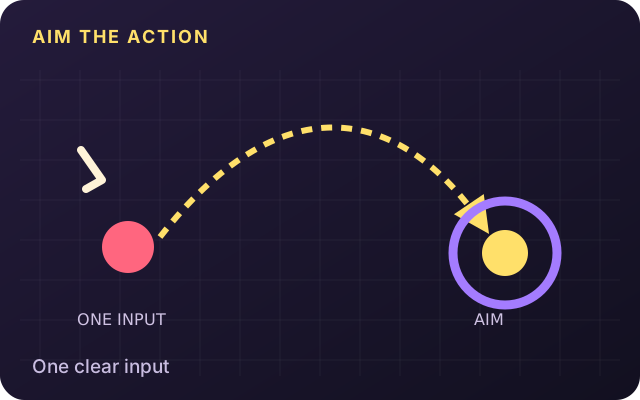
Playgama lists left-click on desktop and tap or swipe on mobile as the basic inputs. In Fun Ragdoll Challenge, that input may represent an attack, throw, launch or trigger depending on the minigame. A useful first attempt is deliberately simple: choose a clear point, act once and watch the complete outcome. The game will show you much more about the local rule than a rapid series of unplanned clicks.
If a level contains a projectile, look for the line between your input point and the target. If it contains a moving hazard, first observe its cycle. If a character can be pushed, decide whether you need direct contact or a chain reaction from another object. These are general reading strategies, not a claim that every scene uses every mechanic. Fun Ragdoll Challenge rewards adapting to the visible objective, so let the current scene tell you what kind of action it expects.
Aim for a useful contact, not the loudest effect
A dramatic ragdoll motion can still miss a level objective. In Fun Ragdoll Challenge, a useful contact is one that moves an object toward a target, removes a blocker, or activates the next part of the scene. Choose the contact point with that purpose in mind. Before launching, ask where the object will go after it is hit. An impact at the center and an impact near the edge can send a moving object on very different paths.
Try to make the first attempt a measurement. If your action falls short, keep the same timing and adjust the aim. If the aim reaches the right area but the target moves away before contact, keep the aim and change the timing. This separation of accuracy from timing prevents every retry from becoming a new guess. The diagram illustrates a general input-to-target path; it is not an image of a specific Fun Ragdoll Challenge level.
Wait for a readable timing window
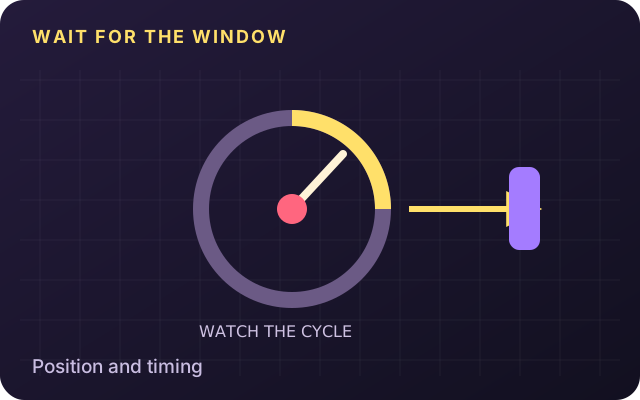
Some minigames are mainly about when you act. If a target moves or a hazard opens and closes, firing immediately may waste an otherwise correct setup. In Fun Ragdoll Challenge, watch one cycle when the game allows it. Identify an open window, a passing object or a repeated pattern, then choose the action that fits that moment. A few seconds of observation can be more useful than several instant restarts.
If you are unsure whether failure came from timing or aim, hold one of them steady. Repeat the same click point at a different moment, or repeat the same moment with a different point. Compare the result. This approach is especially valuable in short levels because the game gives fast feedback. Fun Ragdoll Challenge can feel chaotic, but a repeatable timing window is often present underneath the unpredictable ragdoll animation.
Turn a failed attempt into one useful change
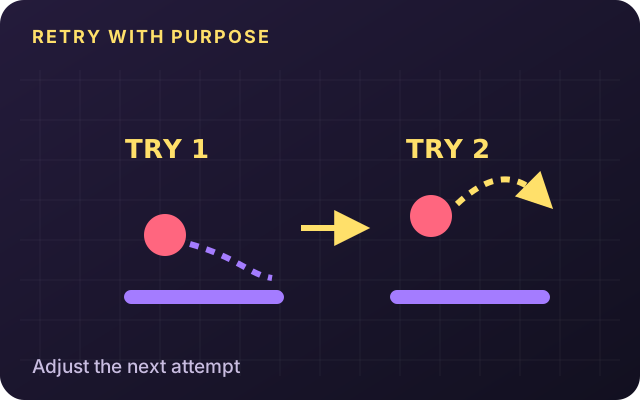
A quick restart is valuable only when the next attempt uses what the first one taught you. After failing a Fun Ragdoll Challenge level, describe the miss in one sentence: the hit was too early, the throw passed above the target, the character landed before the hazard opened, or the wrong object was triggered. Then change just the relevant input. This keeps short levels from becoming a blur of identical failed clicks.
Three attempts can be enough to diagnose a scene. Use the first to learn the rule, the second to change a single variable, and the third to confirm the better path. If every attempt looks different despite identical inputs, the physics may introduce variation; then aim for a robust route with a wider margin rather than a perfect pixel. Fun Ragdoll Challenge is most approachable when the restart loop is treated as feedback, not as punishment.
Expect different mechanics between minigames
The Playgama listing names several types of minigame within Fun Ragdoll Challenge, including playground destruction, boxing, shooting and knife throwing. That variety is the point of the collection. It also means a tip for one level may be useless in the next. Read the local objective again whenever the scene changes. Identify whether you are aiming, waiting, striking or arranging a reaction before you commit to an input.
The same caution applies to rewards and progression. A host page may describe cosmetics or leaderboards, but exact availability can vary by version and account state. This guide focuses on the playable decisions that carry across the collection. For a game with a consistent obstacle-building loop instead, return to No Pain No Gain. There you place traps around a falling ragdoll and learn from repeated contacts rather than switching to a new minigame rule each time.
Quick answers
Is Fun Ragdoll Challenge one continuous sandbox?
No. The referenced release is a collection of short physics minigames with changing objectives.
What are the basic controls?
The Playgama listing describes left-click on desktop and tap or swipe on mobile. The meaning of that input depends on the current minigame.
Can I play Fun Ragdoll Challenge here?
This page provides an original guide and a link to the Playgama release. Use the play button above to open the game.
What should I change after a failed level?
Name the miss first, then change only aim or timing. Keeping one variable fixed lets the retry answer a useful question.